
SFMTA
Improving reporting experience

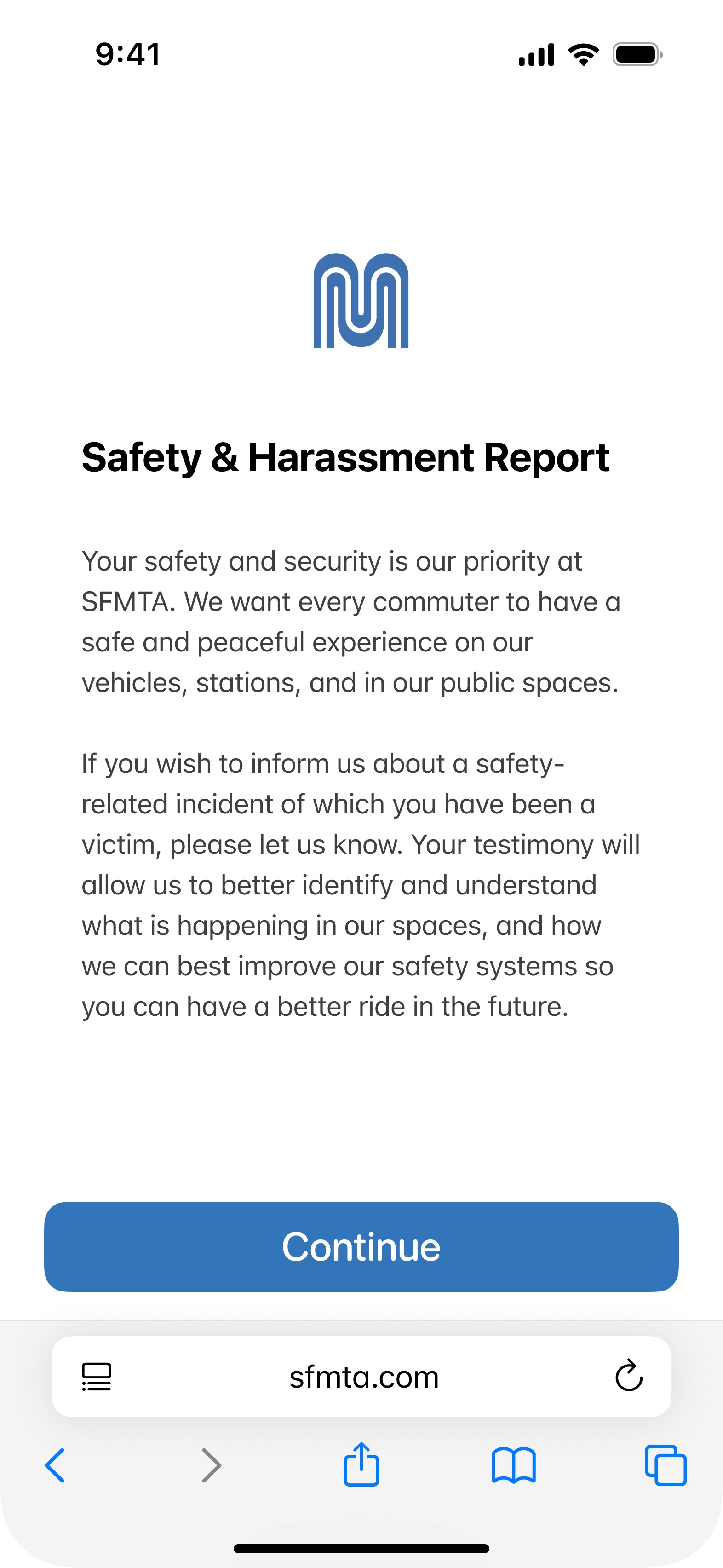
Empathy statements.

Progress and navigation simplified.

Helpful resources.
The Problem
SFMTA is the premier San Francisco Public Transit organization; their mission statement is to connect San Francisco through a safe, equitable, and sustainable transportation system.
They have an existing "Feedback From" but it's primarily designed to meet internal administrative needs to perform investigations, which results in a suboptimal user experience for passengers. The SFMTA is seeking increased incident reports from its commuters regarding harassment to help improve their transport system.

Current stats show that only
of reported incidents are harassment related. So, this brings us to asking…
How might we create a new Muni harassment intake process to make a more user-centered, emotionally supportive, and accessible experience?
The Current Form
It's unclear why our users are not to completing the form; however, we can begin by gaining a deeper understanding of the existing form structure. We started off by evaluating the form and we noticed several issues inherent to the current intake system.

Language and Navigation
The form is difficult to navigate and there is an unclear use of language in the reporting process leading to miscommunication and confusion

Lengthy and Unclear
Input fields are broken up into multiple sections, more fields unfold as you complete fields making the process longer and less intuitive

Inconsistent Input Fields
This form displays inconsistent input field widths, causing a lack of visual alignment and reducing the overall readability and usability of the form

Buggy UI and Formatting Errors
UI component issues, such as the date field requiring rigid formatting and there are drop down bugs with two drop down overlays.
Experiencing a users journey
We wanted to gain first-hand experience with the Muni environment to familiarize ourself with the Muni infrastructure. We took the East routes (14R and 9 busses + the J line) and North routes (North Rode 38R and 1 bus) as they are some of the most popular busses. We got off at stations and curb stops, observed how individuals & groups on busses interact with their surroundings, and took notes on anything we found intriguing.


Bad Space Utilization
Critical information, such as safety instructions and bus details, are poorly placed or non-obvious.
Unclear Information
Bus details are available but lack clear relevance, while safety information is insufficiently addressed.
Advertising Over Safety
Ads are prominently displayed on buses and at stops, overshadowing safety and harassment information.
Understanding users
We conducted interviews to deepen our understanding of public perception of harassment on transit and system and conduct usability tests to identify pain points navigating the current feedback form.
User Survey Responses
73%
experienced discomfort on public transit
97%
did not make a report to the SFMTA
92%
go to family and friends to seek support
User Interviews & Usability Tests
5/6
haven't reported incidents, doubting effectiveness of the form
4/6
expressed annoyance with many conditionals after completing fields
4/6
struggled to locate the reporting form during usability testing
For the individuals who said they didn't compile a report, we followed up with: "If you did not make a report could you help us understand why you chose not to?”
User 1
“It seemed inconvenient to do so and by the time I got off at my stop I just decided to ignore it and move on with my day.”
User 2
“I just wanted to get off the bus and get out of the situation.”
User 3
“I feel incidents like this happen all the time so it would not make a difference and it would be too time consuming to get in contact with someone.”
Key Takeaways
We affinity mapped our findings from interviews, secondary research, and here are our main takeaways from
Lack of Trust
Users believe that reporting to SFMTA doesn't result in any immediate action that can bring closure to their situation
Form Usability
Form input fields are mostly intuitive but many don’t expect themselves to recall vehicle ID when reporting.
Lack of Visibility
Users are not aware of the different types of harassment that can be reported via SFMTA’s feedback form.


